Kolomore Get a quote

Home / Water-based paint

Water-based paint · since 2021

Five years of experience with water-based paint.

There is a big difference between having a water-based product in your range and having set up your entire production for water-based surface treatment. Since 2021, Kolomore has worked systematically to phase out solvent-based products, and since the end of 2022 its regular production has been water-based. Today we paint with 100% water-based paint.

Over the years, many companies have introduced water-based alternatives in selected product areas. It is a sensible step, but it does not necessarily place the same demands on the organisation and production as a complete changeover. Kolomore has chosen a more consistent path.

The figures

Water-based paint in figures.

Since
2021systematic phase-out of solvent-based products
VOC, 2024
2.6%VOC share of paint consumption
Today
100%water-based paint
  1. 2021The phase-out begins

    Kolomore begins systematically phasing out solvent-based products where a suitable water-based alternative exists.

  2. End of 2022Production converted

    Regular production has been converted to water-based systems.

  3. Today100% water-based paint

    We buy 100% water-based paint. Even water-based paint contains a very small amount of solvent, which is why the 2024 ESG report puts the VOC share of paint consumption at 2.6%.

Source: Kolomore’s ESG reports for 2024 and 2025. The VOC share is from the 2024 report, because the 2025 report has no corresponding figure.

Five years of experience

Built-up specialist knowledge.

Five years of experience means that Kolomore has built up practical knowledge of how different water-based products behave in an industrial production process.

It is experience that cannot necessarily be bought through an investment in new production equipment. It has to be built up through daily production and continuous optimisation.

This includes, among other things

  1. 01Choice of paint and lacquer
  2. 02Application methods
  3. 03Drying processes
  4. 04Humidity and temperature
  5. 05Surface quality
  6. 06Production speed
  7. 07Quality control

From niche to industry

From niche alternative to professional industrial solution.

Water-based paint has undergone significant technological development. In the past, water-based products were often seen as an environmentally friendly alternative to traditional solvent-based products, but with certain compromises in quality, durability, surface finish and production speed. That is no longer the case.

Developments in binders, acrylic technology, polyurethane dispersions, curing and UV technology have made it possible to produce water-based paints and lacquers that can meet very high industrial requirements.

No longer an experiment

For Kolomore, it is no longer a question of testing whether water-based paint can work in industry. It is a form of production the company has worked with systematically since 2021.

This includes, among other things, the surface treatment of

  1. 01Timber profiles and mouldings
  2. 02Wood panels and building components
  3. 03Furniture parts and fixtures
  4. 04Doors, frames and window elements
  5. 05Wood products requiring fire-retardant treatment
  6. 06Other industrial wood products with requirements for wear resistance, adhesion and finish

5 years of developing, refining and streamlining production with water-based paint.

Kolomore has thus built up practical experience in running industrial surface treatment with water-based products in regular production. This has required investment, adaptation of production processes, technical understanding and close collaboration with suppliers.

It is also an important part of the company’s positioning in the market: high industrial capacity and modern surface treatment do not have to be based on traditional solvent-based products.

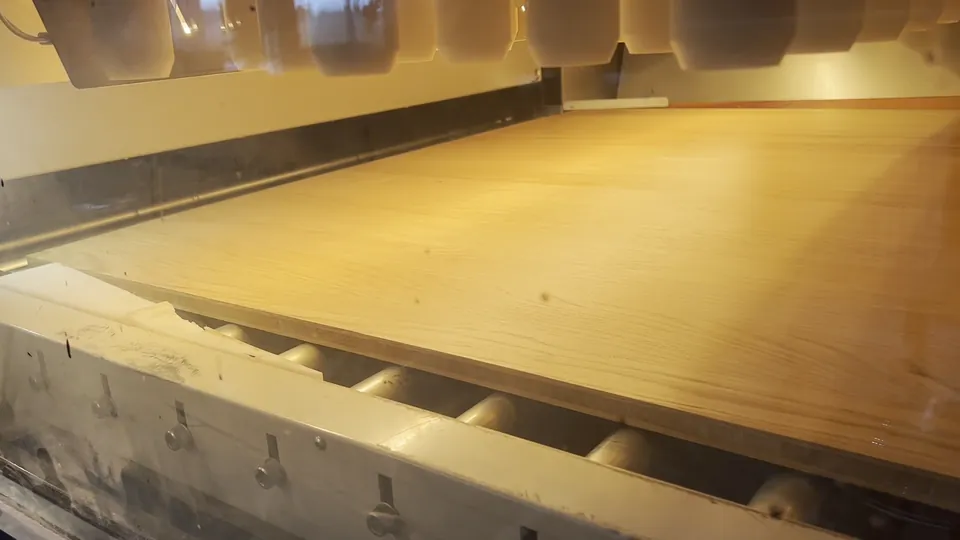
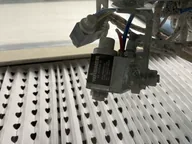
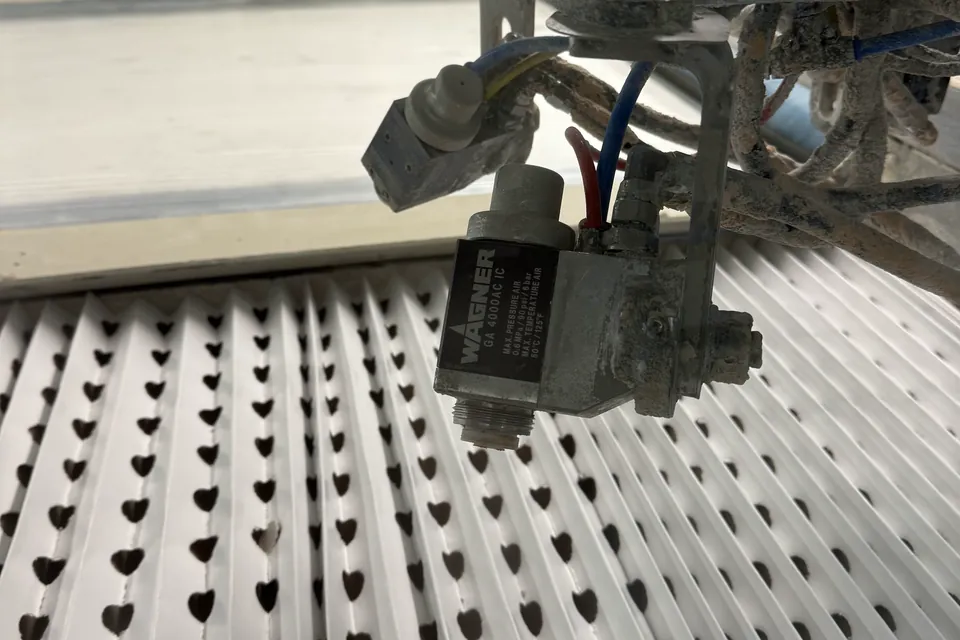
The spray head above perforated panels in the traverse line
The paint is sprayed on in the traverse line
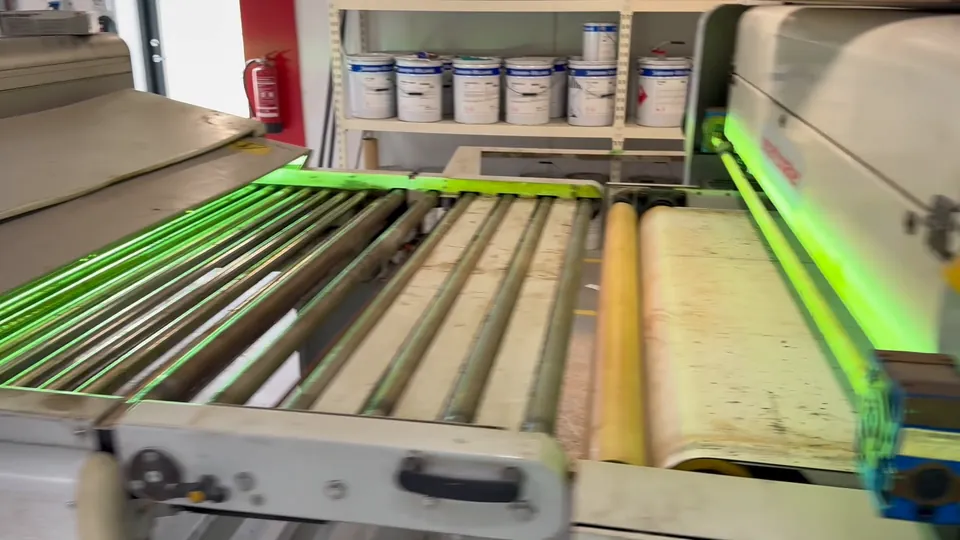
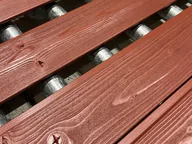
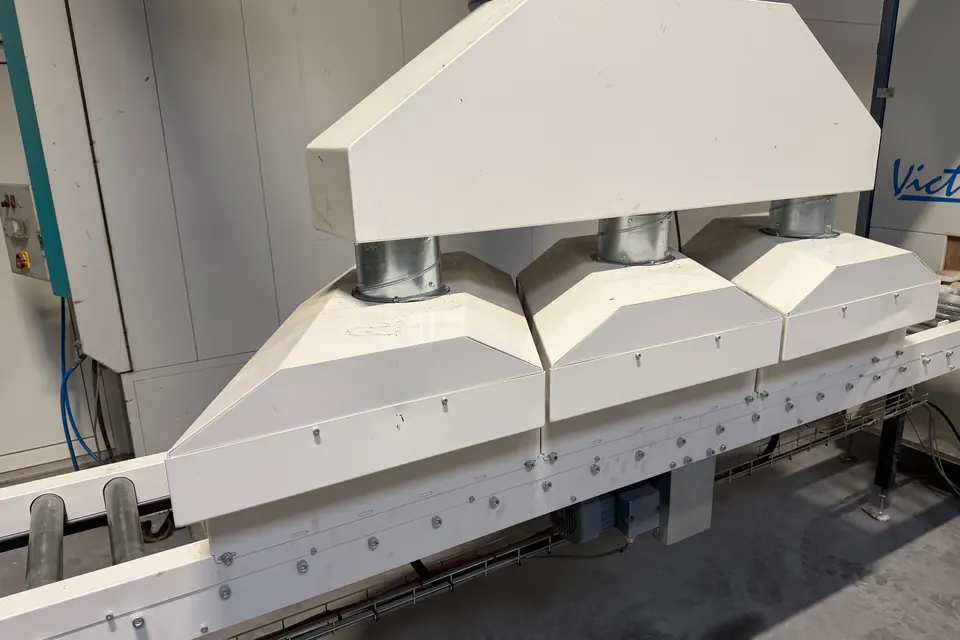
IR heaters above the roller conveyor at Kolomore
Gently heated air and short-wave IR drive out the water

What is water-based paint, really?

The water carries the paint.

What makes water-based paint special is that water acts as the carrier for the paint’s binders, pigments and other additives.

When the paint is applied, the water begins to evaporate. The binder particles thereby move closer together and gradually form a continuous film on the surface. Depending on the product’s chemistry, further chemical curing or cross-linking may then take place, giving the finished surface its properties.

Chemical curing occurs, for example, through a reaction with a hardener or with oxygen, but it can also take place in a chemical process initiated by intense UV light.

How water-based paint dries Three steps on a piece of wood: the paint is applied as water with binder and pigment, the water evaporates, and the binder coalesces into a continuous film.
The water evaporates and the binder coalesces into a film

The main constituents of a water-based paint are typically

  1. 01
    Binders

    Provide cohesion, adhesion, strength and durability.

  2. 02
    Pigments

    Provide colour and, where relevant, hiding power.

  3. 03
    Water

    Acts as the primary carrier.

  4. 04
    Additives

    Regulate flow, foaming, surface tension and drying, among other things.

  5. 05
    Any auxiliary substances

    Can support film formation and subsequent curing.

It is important to understand that water-based paint is not necessarily free of chemicals or organic solvents. Most water-based paints contain small amounts of organic auxiliary substances, preservatives and other chemical components.

The difference therefore does not lie in water-based paint being completely chemical-free, but in VOC emissions being virtually non-existent.

The advantages

The main advantages of water-based paint.

Lower VOC emissions

One of the most significant advantages of water-based paint is the generally lower content of VOCs (volatile organic compounds).

Traditional solvent-based products can contain significant amounts of organic solvents, which evaporate during application and drying, sometimes as much as 80%. With water-based systems, these emissions can be reduced significantly.

This matters on several levels:

  • Lower emissions of organic solvents to the surroundings
  • Less need to handle large quantities of solvents
  • A far better working environment with less exposure to solvent vapours
  • A better starting point for the company’s overall environmental work

The Danish Environmental Protection Agency generally recommends choosing water-based products when they are suitable for the purpose. However, the Agency also stresses that water-based products can still release chemical substances during application, drying and curing.

For Kolomore, this is a significant competitive parameter. When the company has systematically converted its production to water-based products since 2021, it is not just a single environmental improvement or a project. It is an integral part of daily production.

A better starting point for the working environment

Less use of organic solvents can be a significant advantage for employees.

Traditional solvents can, among other things, cause:

  • Headaches and dizziness
  • Respiratory irritation
  • Skin and eye irritation
  • Fire and explosion hazards when handling and storing certain products

Water-based products can reduce several of these risks.

However, this does not mean that ventilation, extraction, personal protective equipment or ordinary safety measures can be omitted. Spray mist, pigments and additives must still be handled correctly.

For Kolomore, the interesting thing is that environmental considerations and the working environment can support each other. A form of production less dependent on traditional solvents is an important step towards more responsible industrial production.

Lower fire load and simpler handling

Water-based paints typically have a significantly lower content of flammable solvents than traditional solvent-based products.

This can bring advantages in connection with:

  • Storage of paint and lacquer
  • Internal transport and handling
  • Fire safety
  • Workplace layout
  • Handling of production waste

Water-based paint can deliver high quality

One of the biggest misconceptions about water-based paint is that it necessarily gives a poorer result than solvent-based paint. That is no longer generally true.

Modern water-based systems can deliver:

  • High surface quality
  • Good adhesion
  • High wear resistance
  • Good scratch resistance
  • Good chemical resistance
  • Attractive gloss and colour stability
  • Durable surfaces for both indoor and outdoor use

The decisive factor is choosing the right product technology for the specific task.

For example, acrylic-based systems can be well suited to a range of industrial wood products, while polyurethane dispersions can be of interest where greater demands are placed on mechanical and chemical resistance.

There are also water-based UV systems that combine the properties of water with UV curing, making it possible to achieve a very efficient production process with really high chemical resistance and high scratch resistance.

It is precisely the combination of product chemistry and correct production control that enables Kolomore to work with large production volumes without compromising on quality.

Timber construction

Better opportunities for the timber construction of the future.

Wood plays an increasingly important role in modern construction and architecture. This includes timber facades, prefabricated building components, interior timber cladding and larger timber structures.

As wood is used in more contexts, the requirements for surface treatment also increase. Consideration must be given to:

  • Appearance and finish
  • Protection against moisture and other influences
  • Long durability
  • Fire performance properties
  • Documentation and quality assurance

Water-based products can be part of many of these solutions. This also applies to specialised systems for fire-retardant treatment, where product choice and documentation must be adapted to the specific application.

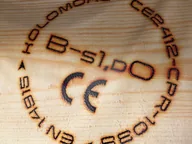
For Kolomore, this is an interesting market. The company can combine its experience with water-based surface treatment with its CE-certified production and expertise in fire-retardant coating of wood products for the construction industry.

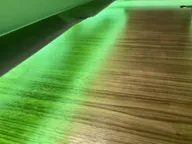
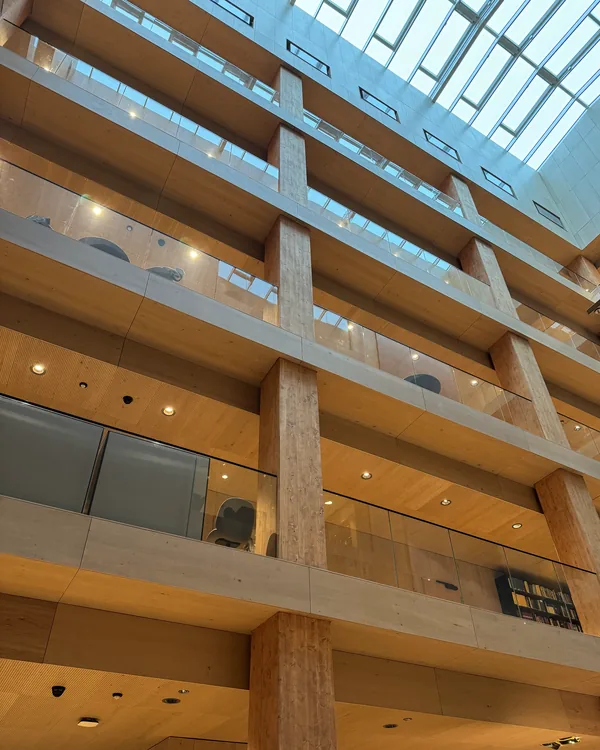
Atrium with timber-clad floors and beams
Wood painted by Kolomore, installed in an atrium

Water evaporates the way water evaporates, whether it comes from a tap in Middelfart or in Barcelona.

From Kolomore’s own text on drying

Water-based paint, honestly

Disadvantages and technical challenges.

It would be wrong to claim that water-based paint only has advantages. There are also some technical challenges that require special attention.

In fact, this is where the difference between an ordinary painting process and a well-developed industrial production process becomes clear. This is where Kolomore’s many years of experience with water-based paint in particular really come into their own.

Drying requires greater process control

Water evaporates the way water evaporates, whether it comes from a tap in Middelfart or in Barcelona.

That is why we influence the rate of evaporation by adjusting:

  • The air temperature
  • The humidity
  • The movement and speed of the air
  • The temperature of the workpiece
  • The thickness of the paint layer
  • The chemical composition of the product

If the humidity is high, the water may have difficulty evaporating. This can extend the drying time and cause problems in production.

Conversely, if the temperature is very high, the surface can dry too quickly while there is still water in the underlying paint layer. This can cause problems with film formation, the appearance of the surface and adhesion.

That is why it is important to control temperature, humidity and ventilation. For Kolomore, this means that the production facilities and drying processes must be adapted to the water-based products. It is not enough simply to replace a solvent-based paint with a water-based one and carry on with exactly the same settings.

Requirements for air circulation and ventilation

Water-based paint requires effective air exchange during drying. Adding heat is not necessarily enough. The air must also be able to carry the evaporated moisture away from the workpieces.

If the air around the workpieces becomes too humid, evaporation is reduced. This means that a good drying system must be able to handle:

  • Controlled air temperature
  • Sufficient air movement
  • Effective removal of humid air
  • Stable humidity
  • Uniform conditions across the workpieces

For a company like Kolomore, where large quantities of timber profiles and panels have to go through production, this is absolutely crucial.

This is one of the reasons why modern industrial surface treatment requires more than good paint products. It requires a complete production system in which spray equipment, transport, ventilation and drying work together.

The grain can rise

A particular challenge with water-based paint on wood is that the water can cause the wood fibres to rise. This can result in a rough surface, especially at the first treatment.

The problem can be handled by, among other things:

  • Correct choice of primer
  • Adjusting the moisture content of the wood
  • Intermediate sanding
  • Choosing a suitable application rate
  • Optimising the drying time
  • Using the right product combinations

This is particularly important when high demands are placed on the finished surface.

In industrial production, it may be necessary to incorporate a specific sanding process between treatments. It must be adapted to the type of wood, the product and the desired end result. On the traverse line and the UV roller line, a wide-belt sander handles sanding and intermediate sanding of the wood before painting.

Not all products can be mixed or used in the same way

Water-based paint is not one specific type of paint.

There are big differences between the products, in terms of their chemistry, drying properties, adhesion and resistance.

Some products require specific primers, while others are developed for direct application. Some require a certain temperature to form a proper paint film, while others have special requirements for subsequent curing.

Know the product

It is therefore important not to focus solely on whether the product is water-based. You also need to know the product’s technical properties.

Here, Kolomore’s five years of experience is an important competence. The company has had the opportunity to build up experience with different products, production conditions and applications.


Cooling

Cooled down before it is packed.

After drying, cooling the painted workpieces is at least as important as drying. If the workpieces are packed while they are warm, the paint is often still soft and a little tacky, so the workpieces risk sticking together.

That is why Kolomore has a water-cooled cooling zone where the temperature of the workpieces is brought down to an acceptable level all year round.

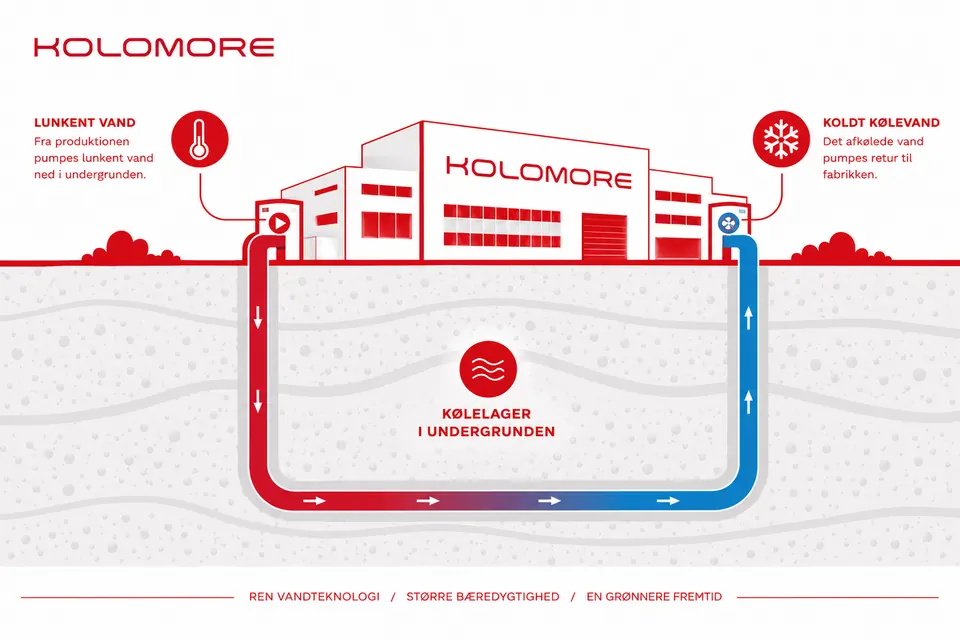
To minimise the energy consumption of the cooling process, we have built a system we call ground cooling. Tap water is circulated underground at a depth of 2.5 metres in pipes that are kilometres long. In this way, we release the heat outside and get cooled water of approx. 13 degrees back all year round, even in summer when the sun is high in the sky.

Drawing of the cooling system: lukewarm water is pumped down into an underground cooling store and comes back cold to the factory
Ground cooling: the cooling water is cooled underground

Capacity

Water-based paint and industrial production speed.

A question that is often asked is whether water-based paint can keep up with modern industrial production. Historically, drying time has been one of the biggest barriers.

Solvent-based products can often become surface-dry very quickly because the organic solvents evaporate quickly. Water-based products have different drying processes, and they have therefore traditionally placed greater demands on drying systems and production planning.

The technology has moved on

But the technology has developed considerably. Modern water-based products can be quick-drying, and with the right combination of temperature, air movement and humidity control, they can be part of efficient industrial production lines.

There are also water-based UV products where the subsequent UV curing can make it possible to achieve a very efficient production process.

Environmentally friendly production does not have to mean lower productivity.

However, it requires investment, technical insight and a production organisation set up for the task.

The equipment at Kolomore

For Kolomore, this is particularly interesting because the company has invested in automation and modern production equipment, including:

  1. 01Ceetec DuoFlex automatic spray machine
  2. 02Ceetec TopFlow automatic spray machine for mouldings
  3. 03Vacumat system
  4. 04UV lacquering options
  5. 05Automated transport and production lines

This allows Kolomore to organise production to suit the technical properties of the water-based products. It means that the company can combine environmental considerations with high capacity.

Economics

The economic perspectives.

It is natural to ask whether water-based paint is more expensive than solvent-based paint.

The answer depends on the individual product and the overall production process, but in general it is actually not more expensive to produce with water.

The price per litre is not the whole story

Looking only at the price per litre, there may be differences that make one product more expensive than the other, but the price per litre does not tell the whole story.

A water-based product can, for example, easily be more expensive per litre but still be competitive if it provides an efficient production process and good material consumption.

The overall economics

It is therefore important to assess the overall economics and not just the purchase price of the paint, and that has been Kolomore’s approach to the area for years.

We have insisted on finding a form of production in which water-based products not only work technically but can also be used commercially on a large scale.

You should also take into account

  1. 01The amount of paint per treated square metre
  2. 02Number of applications
  3. 03Drying time and capacity
  4. 04Energy consumption
  5. 05Cleaning costs
  6. 06Maintenance of production equipment
  7. 07Costs of ventilation and safety
  8. 08Handling and disposal of waste
  9. 09Any investments in production equipment

Environment

Not automatically environmentally neutral, but a good part of the way there.

It is important to take a nuanced approach to the environmental benefits.

Water-based paint is generally a better starting point when the aim is to reduce the use of organic solvents. But this does not mean that the products have no environmental impact.

Manufacturing the paint itself also consumes a fair amount of CO2, which is why we prefer products where the manufacturer uses vegetable oil instead of fossil oil.

There are still a number of issues that need to be handled:

  • The production of paint requires raw materials and energy
  • The products may contain preservatives and other chemical substances
  • Cleaning produces waste water with paint residues, which must be handled
  • Drying and curing require energy

That is precisely why Kolomore’s environmental work does not stop at the choice of water-based paint.

We also work with

  1. 01Our own electricity production with solar panels
  2. 02Purchasing only CO2-neutral electricity
  3. 03District heating that supplies all the heating energy
  4. 04Use of ground cooling for cooling water
  5. 05Electrification of the company’s internal and external vehicles
  6. 06Replacing compressed-air solutions with electric actuators where possible
  7. 07Airless atomisation rather than traditional air atomisation

It is the combination of these initiatives that gives a fairer picture of Kolomore’s environmental efforts.

ESG and sustainability

Do you have a production run that needs painting?

Tell us the workpiece, quantity and finish you want, and we will get back to you with a quote. If you have drawings or a sample, mention it in your message.

Get a quote
Bo Hjorth Jensen

Bo Hjorth Jensen founder and CEOCall +45 93 96 18 28Email bhj@kolomore.com

Business customers only. No sales to private customers